
Lipedema or Lipoedema? Symptoms, Stages, and How Compression Helps
Learn about lipedema (lipoedema) stages, treatment options, and how compression garments help manage symptoms before and after surgery.
If you’ve been hearing the words lipedema or lipoedema and wondering what the difference is, or if you’ve been recently diagnosed and are feeling overwhelmed, you’re not alone. This condition affects millions of women worldwide, but for far too long, it’s been misunderstood, misdiagnosed, or simply overlooked.
In this blog post, I’ll brifly walk you through a little bit of the background, stages, treatment options, and why compression garments (that is something we are expert at), play such an important role at every step of the journey.
Lipedema or Lipoedema: What’s the Right Word?
Both words describe the same condition, just spelled differently depending on where you are in the world. In American English, it’s spelled lipedema and in British English, you’ll see lipoedema. The word itself comes from Greek roots: “lipos” (fat) and “oidema” (swelling). And over time, the American spelling got simplified, like many other medical terms or even non medical words.
From what we’ve seen here in the GCC countries such as UAE, Saudi Arabia, Qatar, etc (especially where we are based in, Dubai and Abu Dhabi), lipedema is the spelling most patients recognize online, even if “lipoedema” technically follows British standards. So in our daily communication, our marketing platform, website and community, we tend to prioritize “lipedema”, simply to match better with what people are searching for.

Image Source: Lipedema Foundation – About Lipedema
A Short History of Lipedema
Lipedema is not a recent discovery, although for many women it still feels like an unfamiliar or overlooked condition.
It was first formally described in 1940 by Dr. Edgar Van Nuys Allen and Dr. Edgar Alphonso Hines Jr. at the Mayo Clinic. They observed a pattern of symmetrical swelling and abnormal fat buildup in the legs of women, which did not respond to diet, exercise, or typical treatments for obesity. These cases were clearly different from both general obesity and lymphedema.
In 1951, the research was expanded through a clinical study involving 119 women, published by Drs. L.E. Wold, E.A. Hines, and E.V. Allen. Their work laid the foundation for what we now understand as lipedema and its distinct characteristics.
Despite this early research, the condition remained largely underdiagnosed for many decades. Even today, it is often mistaken for simple weight gain or lifestyle-related fat accumulation. Many of the women we speak with share similar stories. They tried diet after diet, exercised consistently, and still saw no change in the size or shape of their legs. This experience can be both confusing and deeply discouraging.
What’s now becoming clearer through growing awareness and new studies is that lipedema may affect up to 11% of women worldwide. The key to improving quality of life is early recognition and a tailored treatment plan that goes beyond weight loss.
Source: Allen & Hines, Mayo Clinic, 1940
Wold, Hines & Allen, Annals of Internal Medicine, 1951
Lipedema Foundation – About Lipedema
The Types and Stages of Lipedema
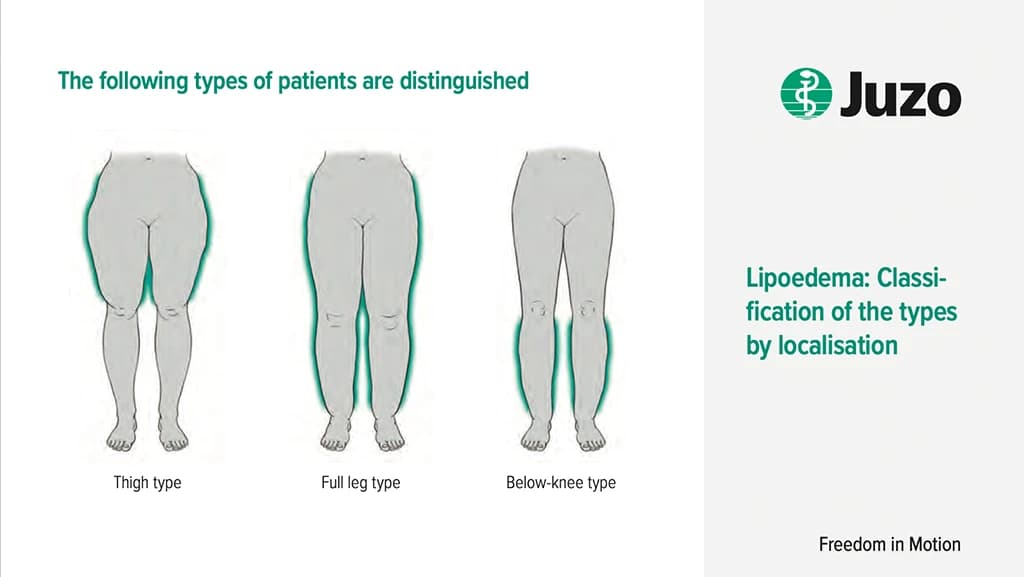
Lipedema doesn’t look the same for everyone. It’s usually classified by where the fat buildup happens:
-
Type 1: Hips and buttocks
-
Type 2: From hips to knees
-
Type 3: From hips all the way to the ankles
-
Type 4: Arms are affected too
-
Type 5: Mostly the lower legs
Most women actually experience a mix, rather than fitting perfectly into one type.
Progression Stages
Lipedema also moves through stages if left untreated:
-
Stage 1: Soft, even skin; swelling feels squishy but no major changes to the skin surface yet.
-
Stage 2: The skin starts to feel uneven or “dimpled” like an orange peel; small lumps appear.
-
Stage 3: Larger, heavy masses form, making walking and moving much harder.
-
Stage 4: Severe stage where lipedema merges with lymphedema (fluid retention issues).
One thing we always stress to our clients: early diagnosis can make a huge difference. If you catch it early, you have many more options to manage it conservatively.
Treatment Options: What Really Helps?
There’s no magical cure for lipedema (yet), but good management can make life so much better. Treatment usually follows two paths:
-
Conservative (non-surgical) options:
-
Manual lymphatic drainage (MLD) therapy
-
Decongestive exercises
-
Compression therapy (we’ll talk more about that below)
-
Anti-inflammatory eating plans
-
Gentle, low-impact activities like swimming or cycling
-
-
Surgical options:
-
Specialized lipedema liposuction techniques that target diseased fat while preserving lymph vessels.
-
Sometimes, after significant fat removal, skin-tightening surgeries are needed too.
-
Important note: not all liposuction is the same. For lipedema, you need specialized surgeons trained in water-assisted or tumescent liposuction, otherwise, you risk damage to delicate lymphatic structures.
Compression Garments: Your Best Friend Before and After Surgery
Having worked closely with many women on their healing journeys, we can confidently say: compression garments are a game changer.
Why You Need Compression Before Surgery
Even before any surgery happens, wearing the right compression garment can:
-
Ease daily pain and tenderness
-
Control swelling
-
Improve overall mobility
-
Help maintain a better body shape
-
Delay the need for surgery for some people
In the UAE’s hot climate, comfort matters even more, which is why we recommend breathable, medical-grade garments specifically designed for lipedema.
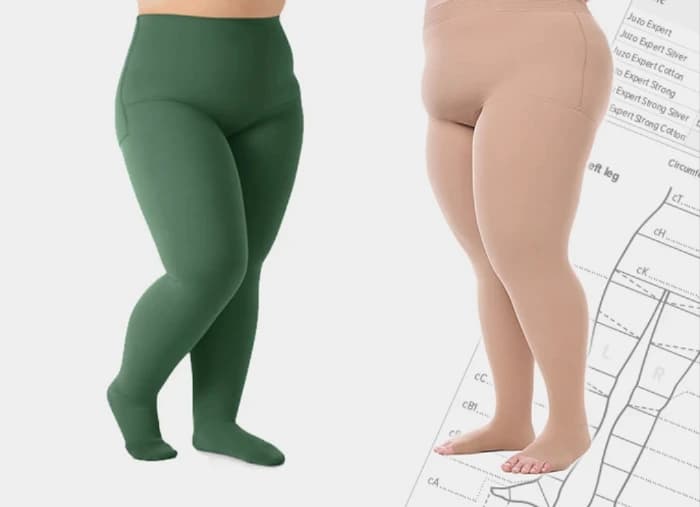
One trusted option that many patients rely on is the Juzo Expert compression range, which offers customizable flat-knit solutions that provide the right balance of support, flexibility, and comfort for sensitive and swollen limbs. Choosing the right garment early can make a major difference in managing symptoms and improving quality of life.
Why You Need Compression After Surgery
After liposuction, the role of compression becomes even more critical:
-
It helps minimize swelling and fluid buildup.
-
It supports tissues as they heal and settle into their new shape.
-
It reduces risks of complications like fibrosis (hard lumps under the skin).
We always advise our clients to have two types of garments ready:
-
Post-operative compression (for the early healing phase we call it stage 1)
-
Long-term daily compression (for ongoing support and symptom control)
As official distributor of Juzo from germany, we offer customized compression garments that fit the unique shape and needs of lipedema patients.
If you’re reading this and thinking “this sounds like me,” I just want to say: you’re not alone, and help is available. Dealing with lipedema is about more than just managing physical symptoms, it’s also about reclaiming your confidence and comfort in your own body and prepare yourself for it. The right treatment plan, the right compression garments, and the right support system can make a world of difference.
And we’re here to help every step of the way. If you ever have questions about sizing, styles, or just need someone who understands, reach out to us at Healfit.
Our certified specialists can guide you to the correct compression class and garment.
Talk to a specialistRelated articles
Flat Knit vs Circular Knit Arm Sleeves: Which One After Breast Surgery?
6 min read
The Story of Compression Garments and Why Quality Matters
5 min read
Understanding Oedema Therapy: A complete guide for Lymphedema and Lipedema patients in Dubai, Abu Dhabi, UAE
8 min readComments
…