
The Evolution of Liposuction: From Early Procedures to Modern Techniques
Liposuction began with an early attempt in France in 1921 and developed into today's cannula-based techniques, from tumescent to ultrasound, laser, power and water-jet assisted methods. Here is that history, and where the compression garment fits in.
Liposuction began with an early, unsuccessful attempt in France in 1921 and developed over the following decades into the cannula and suction techniques used today, including tumescent, ultrasound-assisted, laser-assisted, power-assisted and water-jet assisted methods. Whichever method a surgeon uses, the patient will usually be asked to wear a compression garment afterwards, and that is the part of the story a garment shop like ours can speak to.
An early attempt in 1921
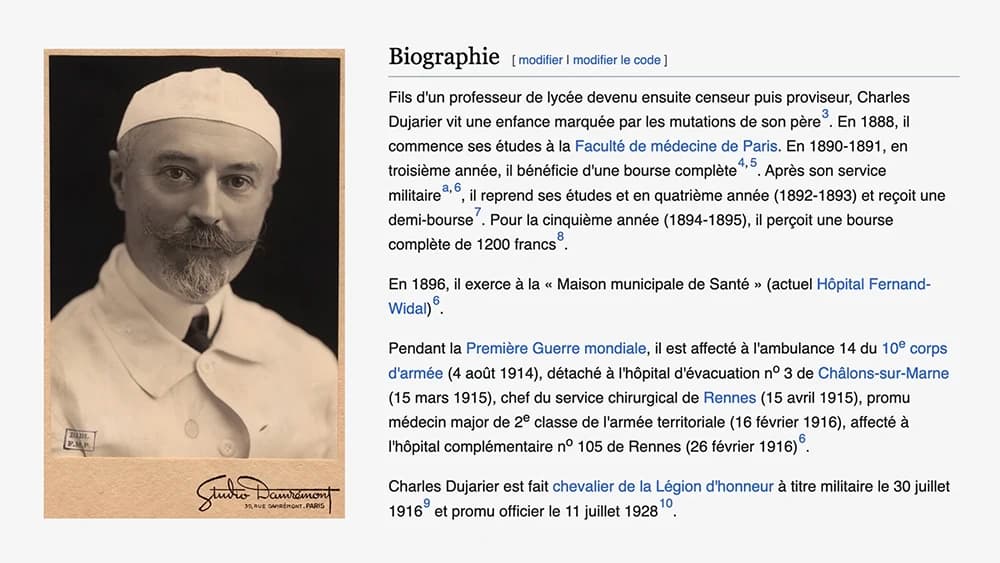
In 1921, the French surgeon Charles Dujarier made one of the earliest recorded attempts to remove fat surgically. The operation led to serious complications for the patient, and the approach was set aside for decades.

The picture above is a screenshot of Dujarier's entry on French Wikipedia.
The cannula arrives in the 1970s
In the 1970s, the Italian gynaecologist Giorgio Fischer introduced a method that used a thin hollow tube, called a cannula, to remove fat by suction. The cannula is still the basic tool of liposuction today.
The tumescent technique in the 1980s
In the 1980s, Dr Jeffrey Klein introduced tumescent liposuction. Before the fat is removed, a large volume of a dilute solution containing lidocaine, a local anaesthetic, and epinephrine (adrenaline) in saline is injected into the area. The tumescent technique is still in use, either on its own or alongside the newer methods below.
Newer methods
From the 1990s onwards, surgeons added tools that work alongside the cannula:
- Ultrasound-assisted liposuction (UAL) uses ultrasound energy. VASER is a later and well-known ultrasound system.
- Laser-assisted liposuction uses laser energy.
- Power-assisted liposuction (PAL) uses a cannula moved by a small motor.
- Water-jet assisted liposuction (WAL) uses a jet of fluid.
Which method suits a patient, and what it means for their recovery, is for the surgeon to explain. Clinics in Dubai and across the UAE offer most of these techniques today. Before deciding anything, talk to a qualified and experienced surgeon who can walk you through the options, the possible risks and what to expect.
Liposuction and lipoedema
Liposuction is not only a cosmetic procedure. Juzo, the German compression maker we distribute in the UAE, describes lipoedema as a painful fat distribution disorder that almost exclusively affects women, and explains that for some patients, surgical intervention may also be considered.
On technique, Juzo writes that suction should be carried out using a method that is gentle on the tissue and lymph vessels, and that power-assisted (PAL) and water-assisted (WAL) systems are used. Those are two of the newer methods in the list above.
Compression remains part of lipoedema care. Juzo notes that for long-term treatment, mainly custom-made medical compression stockings with flat knit are used. We supply Juzo's made-to-measure flat-knit range through our custom-made lymphoedema and lipoedema programme, where garments are knitted to each person's measurements. Ready-made garments for wear after lipoedema surgery are in our post-lipoedema surgery compression garments.
Where the compression garment fits in
The operation is only one part of the plan. After modern liposuction, your surgeon will usually ask you to wear a compression garment over the treated areas, and they decide which type and for how long.
In general terms, a garment applies steady, even pressure over the treated area and holds dressings or foam pads in place. What that pressure is meant to do in your case is your surgeon's call, because it depends on the technique, the areas treated and how you heal.
How a garment is chosen
Choosing a garment comes down to three questions, and the first two are answered by your surgeon.
- Which areas need covering? The garment follows the treated areas: abdomen and flanks, thighs, knees, back, arms or chest. A procedure that included the back needs a garment that covers the back.
- Which stage? Some surgeons ask for a softer first garment and a firmer one later. Others use one garment throughout.
- Which size? Sizes come from body measurements, such as waist, hips and thigh, taken the way each brand's size guide describes.
After that, small practical details make a garment easier to live with: front hooks or zips, a breathable latex-free fabric, flat seams and an opening for using the toilet. You can compare the shapes in our women's liposuction compression garments and our men's liposuction vests and suits. For stages, wear and fit in more detail, read our guide to compression garments after liposuction.
Many people buy the garment before surgery so that it is ready on the day. If you do, ask your surgeon which coverage and stage they want first, then measure exactly as the size guide asks. If you fall between two sizes, ask your surgeon or our team before you order, rather than guessing.
Common questions
Who performed the first liposuction?
The earliest attempt usually cited is by the French surgeon Charles Dujarier in 1921. Removing fat by suction through a cannula, the basis of liposuction today, was introduced in the 1970s by Giorgio Fischer in Italy.
What is tumescent liposuction?
It is the technique introduced by Dr Jeffrey Klein in the 1980s, in which a dilute solution of lidocaine and epinephrine in saline is injected into the area before the fat is removed.
Which liposuction technique is best?
There is no single answer for everyone. The right technique depends on the person and the areas treated, and only a qualified surgeon who has examined you can advise on it.
Will I need a compression garment whichever technique is used?
Your surgeon will tell you. If they ask for one, bring their instructions and contact us, or visit our shop at 610 Clover Bay Tower, Business Bay, Dubai, for help with coverage and size.
Sources
Statements on this page about conditions, treatment or recovery are taken from the published sources below. Healfit is a retailer, not a clinic — your own clinician decides what is right for you.
- 1.Lipoedema - Juzojuzo.com
Our certified specialists can guide you to the correct compression class and garment.
Talk to a specialistRelated articles
Comments
…