

Compression Garments After Liposuction: Stages & Fit
After liposuction, your surgeon decides which compression garment you wear and for how long. This guide explains stage 1 and stage 2 garments, the right coverage, fabric, fit and washing.
After liposuction, your surgeon will usually ask you to wear a compression garment, and it is your surgeon who decides which type, which stage and for how long. Our part is to make sure the garment covers the treated areas, matches your measurements and is comfortable enough to live in day and night.

What the garment is for
A compression garment applies steady, even pressure over the areas that were treated and holds any dressings or foam pads in place. Your surgeon will explain what that pressure is meant to do in your case, because it depends on the technique, the areas treated and how you heal.
We look after the practical side: the right shape, the right size and a garment you can keep on as instructed. A garment that pinches, rolls down or rides up is hard to wear for long hours, so fit matters as much as the brand on the label.
Stage 1 and stage 2 garments
Many surgeons talk about two stages of garment. The terms are not a fixed standard, so check what your own surgeon means by them.
- Stage 1 is the garment worn first after surgery. It is made to accommodate swelling and dressings, and it usually has front closures such as hooks or zips, so you can put it on without pulling it over tender areas.
- Stage 2 is a firmer garment for the next period, worn once your surgeon says you are ready. It is often smoother and more discreet under clothes.
Some surgeons use one garment throughout. Others ask for a change part way through. Bring your surgeon's written instructions when you choose, and we will match the garment to them.
How long you wear it
Your surgeon decides. Wear time depends on the type of liposuction, the areas treated and how you heal, so follow the written schedule you were given rather than a general rule from the internet. If you are unsure whether to keep wearing the garment, or when to move to a firmer one, ask at your follow-up appointment.
One practical point applies to almost everyone. If you are asked to wear the garment day and night, you will want a second one to change into while the first is being washed.
Choosing the right coverage
Liposuction garments are cut to cover particular areas of the body. The shape you need follows the areas your surgeon treated:
- Abdomen and flanks: a garment from under the bust to the thigh or knee.
- Thighs, knees or calves: a longer leg, to below the knee or down to the ankle.
- Back included (often called 360 liposuction): a garment with a raised back panel, such as our 360 liposuction compression bodysuit.
- Men's chest and flanks: a compression vest.
You can compare the shapes in our women's liposuction compression garments and our men's liposuction vests and suits. If your surgeon asks for extra pressure over the abdomen, a lipo foam pad is worn under the garment, never instead of it.
Material and fabric
You will wear the garment for long hours, and often in the UAE heat, so the fabric matters. Look for a breathable, latex-free knit that stays soft against the skin. The Revee garments we stock are made in Italy from LYCRA fabric and are latex-free.
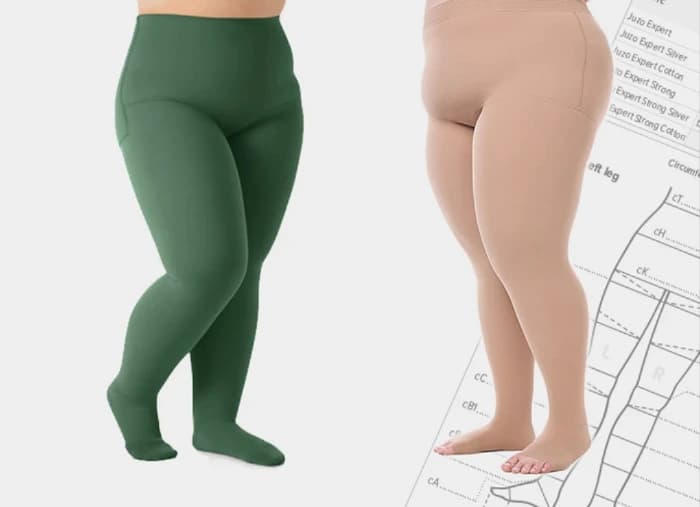
Juzo, made in Germany, also offers made-to-measure flat-knit garments, which we supply through our custom-made garments programme. A custom-made garment is knitted to one person's measurements, which is useful when a body shape falls between ready-made sizes. Whether one suits you after liposuction is a question for your surgeon.
How a good fit feels
A well-fitted garment presses evenly over the whole treated area. It should feel firm and close, like a second skin, without pinching or digging in at the edges.
- Seams and edges lie flat and do not roll.
- Hooks, zips or Velcro close without a struggle.
- You can sit, stand and walk without the garment sliding.
- No single spot presses harder than the rest.
Revee sizes its liposuction garments from body measurements such as waist, hips and thigh, and each product page shows which measurements to take and how. If you fall between two sizes, ask your surgeon or our team before you order. If a garment feels painful, causes numbness or marks the skin, loosen it and speak to your surgeon.
Hygiene and washing
Because you wear the garment so much, choose one that is easy to keep clean. Many liposuction garments have an opening between the legs, so you can use the toilet without taking the garment off.
Always follow the care label. As a safe rule, wash compression fabric in water no warmer than 30°C with a mild soap, and never above the maximum temperature the label gives. Squeeze the water gently through the fabric. Do not scrub it by hand, and do not twist or wring it, because that stress loosens the elastic faster than a gentle wash. Close any Velcro before washing, then dry the garment flat in the shade, away from direct heat.
Common questions
Who decides how long I wear my garment?
Your surgeon. Wear time depends on your procedure and on how you heal, so follow the written schedule you were given and ask at your follow-up if you are unsure.
Can I buy my garment before surgery?
Yes, and many people do, so it is ready on the day. Ask your surgeon which coverage and stage they want, then take the measurements the size guide asks for. Revee bases its sizing on measurements taken before surgery.
Can I wear ordinary shapewear instead?
Ask your surgeon first. Shapewear is made for appearance under clothes, while a post-surgical garment is designed for long wear after an operation, with features such as front closures and a hygienic opening.
Can you help me choose and size a garment?
Yes. Visit our shop at 610 Clover Bay Tower, Business Bay, Dubai, ask about a home visit, or contact us with your surgeon's instructions, and we will help you choose the shape and size they asked for.
Our certified specialists can guide you to the correct compression class and garment.
Talk to a specialistRelated articles
Comments
…